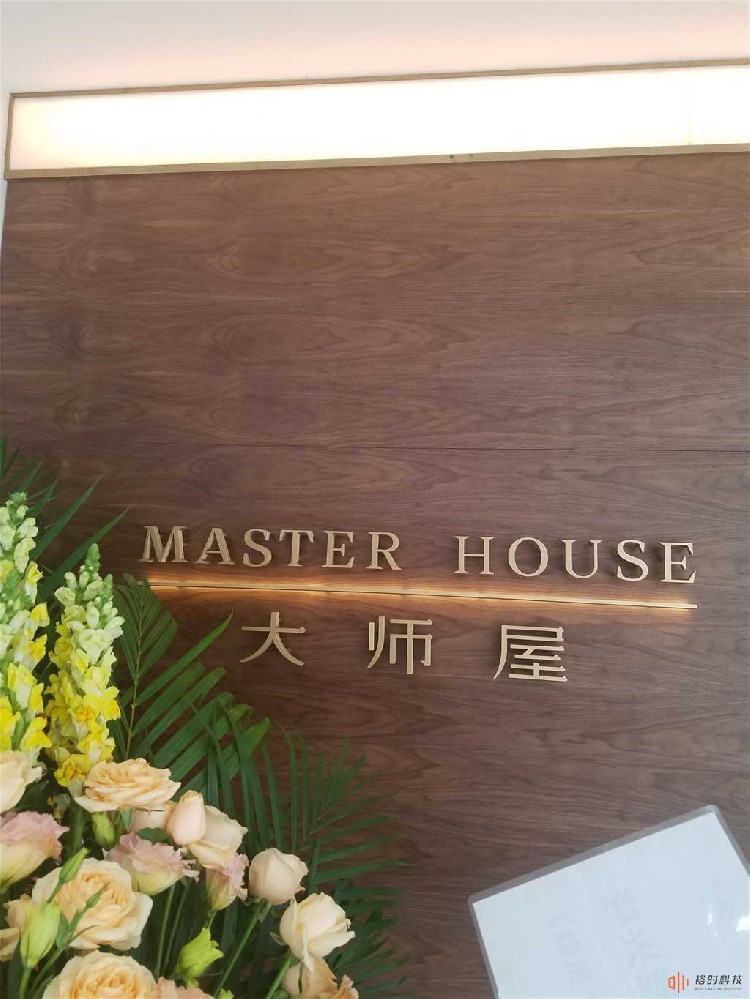
Jinghui Building Master House Restaurant
Project Overview
The project is located in Beijing Jinghui Building, with an area of 209 square meters and a volume of approximately 668 cubic meters. The restaurant has 58 seats and is currently a well-known high-end restaurant. The interior decoration of the restaurant is fashionable and generous, with reasonable space utilization, making it an outstanding representative of modern restaurants. The sound environment of a restaurant has a certain impact on customers' mood and appetite. For high-end restaurants, having a good sound environment is essential. Vienna Acoustics Company will select materials and structures based on the restaurant decoration design style, combined with the spatial layout of functional areas, and scientifically design the material structure and sound absorption position. Acoustic design will be deeply coordinated with the architectural decoration design scheme, organically integrating acoustics into the art of decoration, creating a quiet, comfortable, and warm dining and leisure environment.


Principles of acoustic design
In the acoustic design stage of the restaurant, the first step is to ensure a low noise level in the hall, providing customers with a quiet dining and communication environment; At the same time, the language clarity in the hall should be ensured, and there should be high language clarity and fullness at all positions in the restaurant. To maintain the quietness of the restaurant, the noise level in the restaurant and kitchen should be controlled reasonably and scientifically. In summary, the following principles of architectural sound design can be derived:
1. The restaurant is quiet and comfortable, with a sound environment suitable for dining, communication, business socializing, and other activities;
2. Control the background noise in the restaurant to meet the standard requirements;
3. The language clarity meets a high standard;
4. There are no obvious sound defects in the restaurant;
5. Architectural design is scientific and advanced, with reasonable material selection;
6. The organic integration of sound design and decorative design has a good decorative effect.
Basis for acoustic design
1. Design Code for Food and Beverage Buildings JGJ 64-89
2. Code for Design of Library Buildings JGJ 38-2015
3. Code for Sound Insulation of Civil Buildings GB50118-2010
4. Environmental Quality Standards for Noise GB3096-2008
5. Master's House Decoration Design Drawing
Acoustic design indicators
The subjective sound quality effect of a hall can be described by some objective acoustic indicators and measurable indoor acoustic parameters. According to the unified definition of these parameters in ISO3382 [(1997 (E))] document, the following objective parameters are very important for a restaurant. The following objective parameters are selected as design indicators:
The maximum allowable background noise value in the hall is an indicator that describes the quietness of the sound environment in the hall, expressed in dBA or noise evaluation curve NR.
Language clarity, used to describe the degree of clarity of language in the hall.
Indoor sound quality evaluation is based on the ISO3382 (1997 (E)) standard, and therefore can serve as an international standard for indoor sound quality evaluation. In order to achieve better sound environment effects, the optimal numerical range of these parameters is based on a large amount of testing and research work and practical experience.
We propose the following acoustic design technical indicators for analyzing the area, decoration, and layout of the Master's House restaurant:
The restaurant needs to provide guests with a quiet dining environment, and the main acoustic indicators of its sound design are background noise and language clarity.
According to the "Code for Sound Insulation of Civil Buildings" GB50118-2010, the minimum allowable noise level for restaurants is ≤ 55dB, and the maximum allowable noise level is ≤ 45dB. The master's house is a high-end restaurant, and both the restaurant brand and indoor environment are leading representatives of modern restaurants. Therefore, the background noise of the master's house needs to meet the high allowable noise level requirements for restaurants, and the background noise should be ≤ 45dB.
Due to insufficient sound absorption in the lobby, there is a high risk of regional echo, vibration echo and other sound quality defects. If the background noise is not controlled, the acoustic environment in the lobby will be poor. It is necessary to set appropriate building sound indicators based on the spatial situation of the lobby building, and adopt scientific and reasonable building sound construction measures to change its acoustic environment.
This restaurant is not only a dining venue, but also a high-end place for people to relax, communicate, and socialize. With high language clarity, it can reduce customers' casual conversations and ordering, improve the dining experience, and provide customers with a relaxed and comfortable place. At present, the language clarity in the public dining areas of most restaurants in China is only about 30% -40%, which makes it difficult for customers to communicate normally during meals and accurately understand notifications from restaurant staff; Foreign restaurants have higher language clarity, generally above 50% -60%, which enhances the elegant feeling of the restaurant. In order to make the Master House a representative of high-end restaurants and break the long-standing sound environment of restaurants in China, we have set its language clarity to 60-70%.
To provide a good dining experience for every customer, there should be no obvious sound defects such as echoes or trembling echoes in the restaurant.
Acoustic treatment measures
1. Acoustic treatment measures for restaurants
Based on the restaurant area and seating capacity of the master's house, it is known from experience that if the master's house is not treated with acoustics, when the master's house is full and a few people are chatting, the background noise inside the restaurant will be difficult to meet the requirements of the sound environment standard. Excessive noise and slow attenuation of sound energy can greatly reduce language clarity, decrease noise and sound energy attenuation time. The best way is to use sound absorption treatment indoors to increase indoor sound absorption. In order to achieve a good sound environment in the restaurant, strong sound absorption treatment should be carried out in the master house restaurant.
According to the national standard GB50118-2010 "Code for Sound Insulation of Civil Buildings", indoor spaces with a volume greater than 400m ³ and a per capita occupied area of less than 20 square meters for mobile personnel should be equipped with sound-absorbing ceilings, and the area of the sound-absorbing ceiling should not be less than 75% of the total ceiling area; The noise reduction coefficient (NRC) of the sound-absorbing material or structure on the ceiling of the restaurant is ≥ 0.7. Considering the requirements of national standards, the interior decoration effect of the master's house, and the current acoustic environment, the restaurant ceiling should be the main acoustic treatment location, and a high sound absorption coefficient sand absorbing board with the same decorative effect as latex paint should be used (with AGG sound absorbing coating technology on the surface) to achieve seamless decoration and sound absorption treatment for the entire restaurant ceiling. Require an average sound absorption coefficient of ≥ 0.7. The use of this sound absorption system not only effectively controls background noise to achieve high standards and language clarity to meet the requirements of building sound design, but also has no impact on indoor decoration effects.


 售前咨询专员
